
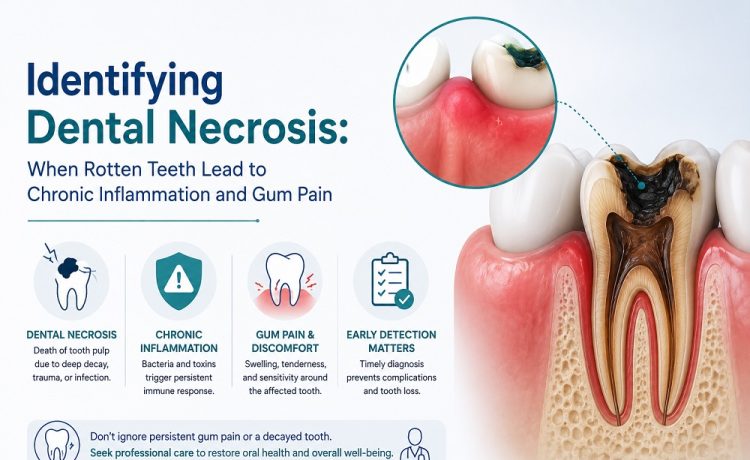
The terms “decay” and “cavities” are common in dental discourse, but when the destruction of tooth structure reaches a critical threshold, the condition advances to what is clinically known as dental necrosis. In colloquial terms, these are often described as rotten teeth. This stage of dental decline represents more than just a structural failure of the enamel; it signifies the death of the living tissue within the tooth.
When a tooth reaches this state of necrosis, it becomes a primary driver of persistent gum pain and chronic systemic inflammation. Understanding the biological transition from a simple cavity to a necrotic tooth is essential for recognizing why immediate clinical intervention is required to protect the rest of the oral cavity and the body’s overall health.
The Path to Necrosis: How Teeth Become “Rotten”
A tooth is a living organ. Beneath the hard, protective layers of enamel and dentin lies the dental pulp—a soft tissue chamber filled with blood vessels, connective tissue, and highly sensitive nerves. Dental necrosis occurs when the blood supply to this pulp is cut off or overwhelmed by bacterial invasion.
1. The Bacterial Invasion
The journey toward rotten teeth usually begins with untreated plaque. Bacteria metabolize sugars to produce acid, which demineralizes the enamel. If this process is not arrested, the bacteria breach the dentin and eventually reach the pulp chamber.
2. Pulpitis and Tissue Death
Once bacteria enter the pulp, the body responds with inflammation (pulpitis). Because the pulp is encased in a rigid chamber of dentin, there is no room for the tissue to swell. The resulting pressure cuts off the microscopic blood vessels entering the tip of the root. Deprived of oxygen and nutrients, the pulp tissue dies—this is the definition of dental necrosis.
3. The Decomposing Matrix
Once the internal tissue is dead, the tooth effectively becomes a hollow vessel for putrefaction. The “rotten” appearance—often characterized by dark brown, gray, or black discoloration—is the result of bacterial byproducts and necrotic tissue breaking down inside the tooth structure.
Why Necrotic Teeth Cause Severe Gum Pain
One might assume that once the nerve inside a tooth has died, the pain would disappear. While the acute “toothache” from the pulp may vanish temporarily, it is almost always replaced by a deeper, more persistent gum pain. This happens because the infection does not stay confined within the tooth.
The Periapical Exit
As the tissue inside the tooth decomposes, the liquefied necrotic debris and bacterial toxins are forced out through the apical foramen (the small opening at the tip of the tooth root). This material enters the periodontal ligament and the surrounding alveolar bone.
1. Chronic Inflammation and Swelling
The immune system recognizes this toxic outflow as a massive threat. It floods the area with white blood cells, leading to chronic inflammation in the gingival tissues surrounding the affected tooth. This results in gum pain that is often described as a deep, throbbing ache that is sensitive to pressure or touch.
2. Abscess and Fistula Formation
In many cases of rotten teeth, a dental abscess forms at the root tip. If the pressure from the pus becomes too great, it may seek a path of least resistance through the bone and gum tissue, creating a “parulis” or a gum boil. This localized swelling is often the most acute source of pain for the patient, signaling that the infection is active and spreading.
The Domino Effect: Systemic Risks of Untreated Necrosis
The presence of a necrotic tooth is not a localized problem; it is a persistent source of bacteremia (bacteria in the blood). The chronic inflammation associated with gum pain around a “rotten” tooth can have far-reaching consequences:
- Bone Loss: Chronic infection at the root tip causes the surrounding jawbone to resorb (dissolve), which can eventually loosen adjacent healthy teeth.
- Cellulitis: If the infection spreads into the soft tissues of the face or neck, it can lead to severe swelling that may compromise the airway.
- Secondary Infections: Bacteria from necrotic teeth have been linked to an increased risk of endocarditis (infection of the heart valves) and other systemic inflammatory conditions.
Management and Intervention Strategies
A necrotic tooth cannot heal itself; the dead tissue must be physically removed to stop the cycle of inflammation and pain.
1. Professional Restorative Procedures
Depending on the extent of the structural damage, a dentist will typically recommend one of two paths:
- Root Canal Therapy: The necrotic pulp is removed, the canals are disinfected and sealed, and a crown is placed over the remaining structure. This “saves” the tooth and stops the outflow of toxins into the gums.
- Extraction: If the tooth is too “rotten” to be saved, it must be removed entirely to eliminate the source of the infection and allow the bone and gums to heal.
2. The Role of Antimicrobial Mouthwash
In the period leading up to or following these procedures, the use of a therapeutic mouthwash is a critical component of infection management.
- Reducing the Bacterial Load: While a rinse cannot reach the dead tissue inside the tooth, it is highly effective at reducing the concentration of pathogenic bacteria in the surrounding “pocket” and on the gum surface.
- Soothing Inflamed Tissues: Antimicrobial rinses help to clear away the irritating byproducts of the infection, which can provide a degree of symptomatic relief for the associated gum pain.
- Post-Surgical Healing: Following an extraction or root canal, a specialized rinse helps maintain a sterile environment, preventing secondary infections and promoting faster tissue closure.
3. Rigorous Interdental Hygiene
Bacteria from a necrotic tooth can easily migrate to neighboring teeth. Maintaining meticulous hygiene through brushing and flossing is vital to ensure that the “rotten” tooth doesn’t lead to a cluster of similar issues in the rest of the arch.
Conclusion: From Crisis to Recovery
Identifying dental necrosis early is the key to preventing the debilitating gum pain and systemic risks that follow. A “rotten” tooth is a clinical emergency that requires professional attention. By understanding that the pain in your gums is often a symptom of the death of the tooth itself, you can take the necessary steps to seek treatment.
Through a combination of professional restorative work and a dedicated home care routine—including the use of a powerful antimicrobial mouthwash—it is possible to eliminate the infection, resolve the pain, and restore the mouth to a state of health. Your teeth are a vital part of your overall well-being; do not let a single point of necrosis compromise your entire systemic health.