

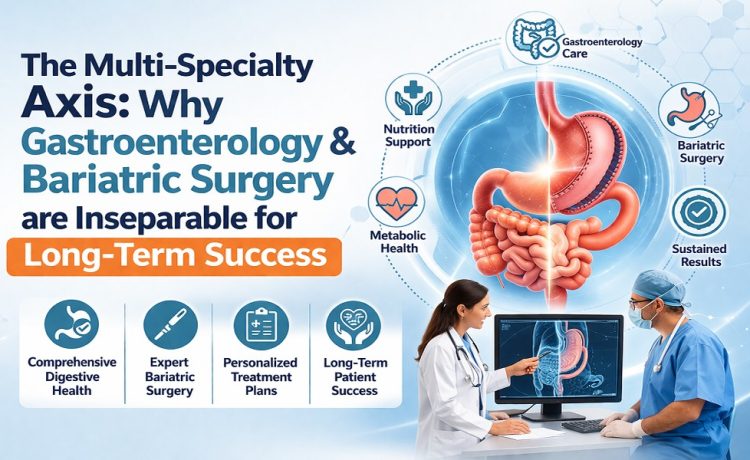
Bariatric surgery is often viewed as a “destination”-a singular event that triggers weight loss. However, in the leading medical centers of the UAE and globally, it is treated as a continuous journey. The success of this journey depends on a strong partnership between the surgical team and the gastroenterology department. This collaboration ensures that the patient’s digestive system is not only prepared for the structural change but is also supported as it adapts to a new physiological reality.
The “Gut-Joint Axis” of weight management involves more than just a reduction in stomach size; it requires a deep understanding of motility, mucosal health, and hormonal signaling. In 2026, the gold standard for obesity medicine is a multidisciplinary axis where the gastroenterologist and bariatric surgeon work as a unified team from the initial consultation through lifelong follow-up.
The Preoperative Phase: Ensuring a Safe Foundation
Before a patient undergoes bariatric surgery, a thorough gastroenterological evaluation is essential. This is not merely a formality; it is a critical safety screen.
Identifying Silent Pathologies
Many patients with obesity suffer from asymptomatic conditions like Helicobacter pylori infections, gastric ulcers, or hiatal hernias. If left untreated, H. pylori can increase the risk of marginal ulcers after a gastric bypass, while an undetected hiatal hernia might necessitate a concurrent repair or a change in the surgical technique.
GERD Assessment and Procedure Selection
Gastroesophageal Reflux Disease (GERD) is highly prevalent in the bariatric population. Since certain procedures, like the Sleeve Gastrectomy, can potentially exacerbate reflux or cause de novo GERD, a gastroenterologist uses pH monitoring and manometry to help the surgeon decide the optimal path. For a patient with severe reflux or Barrett’s Esophagus, a Roux-en-Y Gastric Bypass is often preferred as it is inherently anti-reflux.
The Postoperative Phase: Managing the “New” Digestive System
Once the surgery is complete, the role of gastroenterology shifts toward monitoring and maintenance. The digestive tract undergoes a massive transformation, not just in size, but in how it processes nutrients and signals the brain.
1. Addressing Functional GI Changes
Following surgery, patients may experience functional symptoms as their body adjusts. Common issues managed by the gastroenterologist include:
- Dumping Syndrome: Rapid gastric emptying that causes nausea, dizziness, and palpitations.
- Biliary Issues: Rapid weight loss significantly increases the risk of gallstones. Gastroenterologists often manage these cases using specialized ERCP (Endoscopic Retrograde Cholangiopancreatography) techniques tailored for altered bariatric anatomy.
- Small Intestinal Bacterial Overgrowth (SIBO): Particularly after malabsorptive procedures, changes in motility can lead to SIBO, which requires targeted antibiotic therapy and dietary management.
2. Nutritional and Malabsorptive Oversight
Procedures like the Gastric Bypass are intentionally malabsorptive. While this drives weight loss, it also changes how the body absorbs iron, Vitamin B12, calcium, and Vitamin D. Gastroenterologists monitor these levels through regular blood work and can intervene with specialized therapies if chronic deficiencies lead to conditions like anemia or metabolic bone disease.
Endoscopic Innovation: The Future of Revision and Repair
One of the most exciting developments in 2026 is the rise of Interventional Endoscopy in the field of bariatrics. This allows for the management of complications-and even weight regain-without the need for traditional “re-operation.”
- Managing Strictures: If a patient develops a stricture (narrowing) at the site where the stomach meets the intestine (the anastomosis), a gastroenterologist can perform an endoscopic dilation, gently widening the area with a balloon.
- Endoscopic Revision (TORE): For patients who experience weight regain due to an enlarged gastric pouch or outlet, a procedure called Transoral Outlet Reduction (TORE) can be performed. Using an endoscopic suturing device, the doctor can tighten the opening from the inside, effectively “resetting” the restrictive nature of the surgery without a single external incision.
- Managing Leaks: In the rare event of a staple-line leak, interventional endoscopists can place self-expanding metal stents (SEMS) to cover the defect, allowing the tissue to heal while the patient continues enteral nutrition.
The Role of the Gut Microbiome and Hormonal Shifts
The “Metabolic” in metabolic and bariatric surgery refers to the profound changes in gut hormones like GLP-1, PYY, and ghrelin. Gastroenterologists are experts in these hormonal pathways and help patients understand how the surgery has “re-wired” their hunger and satiety signals.
Furthermore, 2026 research has highlighted the importance of the gut microbiome in maintaining weight loss. Changes in the intestinal flora after surgery can influence everything from metabolism to mood. Integrative clinics now use personalized probiotic and dietary protocols to ensure the patient’s internal ecosystem supports their new weight.
Information Gain: Recent studies suggest that the success of bariatric surgery is not just about “calories in vs. calories out,” but about a fundamental shift in the bile acid composition and gut-brain signaling, which is why long-term gastroenterology follow-up is superior to surgery alone.
Conclusion: A Lifetime of Collaborative Care
The decision to undergo bariatric surgery is a brave step toward a healthier future. However, the most successful patients are those who view their surgery as one piece of a larger medical puzzle. By integrating the expertise of gastroenterology, patients ensure that every aspect of their digestive health-from mucosal integrity to the health of their microbiome-is optimized for long-term vitality.
In the UAE’s leading medical facilities, this multidisciplinary approach is the baseline. When surgeons and gastroenterologists walk side-by-side with the patient, the result is not just weight loss, but a total transformation of metabolic health.