
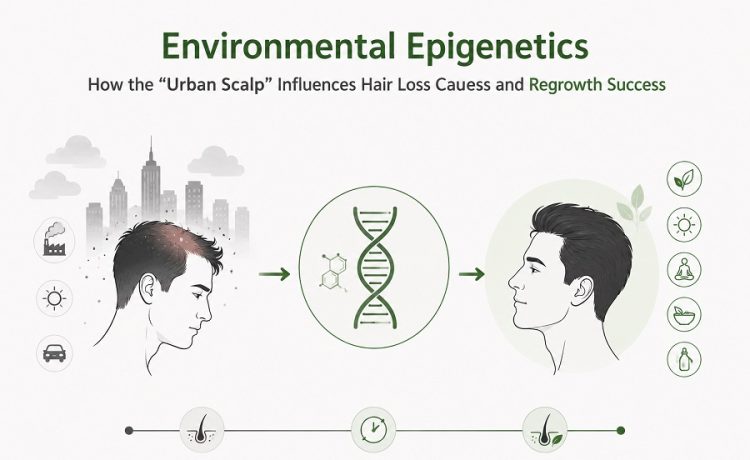
In the clinical landscape of 2026, the study of hair restoration has undergone a profound transformation. While genetics was once considered the sole architect of hair density, the medical community now looks toward epigenetics—the study of how environmental factors and lifestyle behaviors can trigger changes that affect the way genes work. This shift has given rise to a specific area of concern known as the “Urban Scalp.”
Living in a densely populated environment introduces a unique set of physiological challenges that act as primary hair loss causes. Understanding how these external stressors interact with your biological blueprint is essential for anyone seeking a successful path toward regrowth hair. By neutralizing environmental triggers and stimulating the follicle at a cellular level, it is possible to override the negative epigenetic signals sent by modern city life.
The Epigenetic Shift: Why Biology is Not Destiny
For decades, many individuals resigned themselves to thinning hair because it “ran in the family.” However, current research highlights that DNA is not a static script but a dynamic one. Epigenetic markers can sit on top of your DNA, turning specific genes on or off based on external stimuli.
When it comes to the scalp, environmental toxins can act as a switch. For example, a person may have a genetic predisposition to androgenetic alopecia that might have remained dormant or progressed slowly in a clean-air environment. However, when exposed to high levels of oxidative stress and pollution, those genes can be “upregulated,” leading to a more aggressive thinning pattern. This realization has changed how we view hair loss causes, moving the focus from inherited traits to environmental management.
Defining the “Urban Scalp”: Modern Hair Loss Causes
The “Urban Scalp” is characterized by chronic exposure to microscopic irritants that the human body did not evolve to process in such high concentrations. In 2026, three specific factors have been identified as the most significant drivers of this phenomenon.
1. Particulate Matter (PM 2.5) and Chemical Pollutants
Urban air is saturated with particulate matter, specifically PM 2.5—particles so small they can easily penetrate the hair follicle and the scalp’s lipid barrier. Once these particles settle into the follicular niche, they trigger a cascade of oxidative stress. This results in the production of free radicals that damage the proteins and lipids essential for a healthy hair shaft. This “urban-induced” inflammation is one of the silent hair loss causes that can lead to premature follicular aging.
2. The Impact of Hard Water and Heavy Metals
Many metropolitan areas rely on aged infrastructure that delivers “hard water” high in calcium, magnesium, and trace heavy metals. These minerals create a biofilm on the scalp and hair fiber. This buildup does more than just make hair feel brittle; it physically blocks the absorption of topical treatments. When the scalp’s surface is compromised by mineral deposits, the path for any regrowth hair solution is effectively obstructed.
3. Circadian Disruption and Blue Light Stress
The hair follicle has its own internal “clock” that dictates when it should grow and when it should rest. Urban environments, characterized by constant artificial light and high levels of blue light from screens, can disrupt this circadian rhythm. When sleep-wake cycles are compromised, the body’s cortisol levels spike. Elevated cortisol is a known inhibitor of hair health, as it can deplete the scalp’s supply of hyaluronic acid and other essential nutrients, acting as a secondary trigger for thinning.
Reversing the Damage: The Pathway to Regrowth Hair
To achieve regrowth hair success in an urban setting, the strategy must be twofold: it must provide a clinical stimulus to the follicle while simultaneously shielding the scalp from the environmental factors mentioned above.
The Role of Vasodilation in Toxic Flush
The most effective way to counteract the “Urban Scalp” is by increasing micro-circulation. A topical treatment that acts as a vasodilator helps to “flush” the follicle. By widening the blood vessels, the scalp can more efficiently deliver antioxidants to the hair bulb to neutralize free radicals caused by pollution. This increased blood flow also ensures that the metabolic waste products generated by oxidative stress are removed more rapidly.
Resetting the Follicular Cycle
Pollutants often push hair follicles prematurely into the telogen (resting) phase. To achieve regrowth hair, the follicles must be manually forced back into the anagen (growth) phase. Clinical-grade topical solutions work by opening potassium channels in the cell membranes. This cellular signaling overrides the “rest” signal sent by environmental stressors, encouraging the follicle to produce thicker, more pigmented terminal hair.
2026 Protocol for Urban Scalp Management
Living in a city requires a specialized hair care protocol. If you are battling urban hair loss causes, the following evidence-based routine is recommended by modern trichologists.
| Factor | Environmental Impact | Restoration Strategy |
| PM 2.5 Pollution | Oxidative stress and “inflammaging.” | Daily scalp stimulation with a topical vasodilator to increase nutrient delivery. |
| Hard Water | Mineral buildup and blocked absorption. | Monthly clarifying treatments to ensure the scalp remains a “receptive canvas.” |
| Blue Light/Stress | Cortisol-induced follicle degradation. | Consistency in treatment to provide a stable “growth signal” regardless of stress levels. |
| UV Radiation | DNA damage to follicular progenitor cells. | Utilizing foam-based treatments that can act as a physical barrier for the scalp skin. |
The Importance of Scalp Hygiene in Treatment Absorption
A common reason why people fail to see regrowth hair results is poor scalp hygiene. In an urban environment, the combination of natural sebum and environmental soot creates a “plug” at the follicular opening.
To ensure that your hair loss treatment is actually reaching the dermal papilla, the scalp must be kept clean. However, over-washing with harsh sulfates can further damage the protective lipid barrier. The goal is to maintain a balanced microbiome—one that is clean enough for treatment penetration but healthy enough to maintain its natural defense mechanisms.
Conclusion: Adapting to the Modern World
The “Urban Scalp” is a unique byproduct of the 21st century, but it is not an insurmountable challenge. While modern life introduces several new hair loss causes, the advancements in clinical trichology in 2026 provide us with the tools to fight back.
Success in achieving regrowth hair depends on understanding that your environment is constantly talking to your genes. By using a medically backed clinical anchor, maintaining a clean scalp environment, and being consistent with your routine, you can effectively silence the negative signals of city life. Your hair density does not have to be a casualty of your zip code. With a science-first approach, you can protect your follicles and enjoy healthy, vibrant hair regardless of the urban stressors surrounding you.