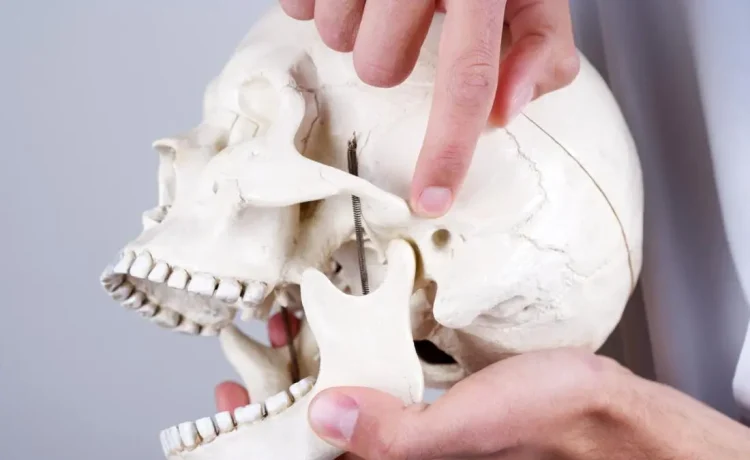
Temporomandibular joint disorders, commonly abbreviated as TMD, are disorders that involve the muscles and joints in the movement of the jaw. Temporomandibular joints (TMJs) are joints that are on each side of the head above the ears and serve as sliding hinges to assist you in chewing food, speaking, and yawning. The stress or damage of these joints and muscles surrounding them may cause pain and difficulty in moving the jaw, which is why consulting a dentist can help with early detection and effective management. TMD is quite widespread, particularly in adults aged 20-40 years, and has millions of patients. It is more common in females as opposed to males. Early detection and intervention may play a great role in everyday comfort and functioning.
Symptoms and Causes:
Symptoms
Symptoms caused by TMD may be of different intensities. The most common include:
Pain in the mouth or face- constant pain around the region of the joint during chewing or talking.
Headaches or migraines – a common pain that can extend to the temples like jaw pain.
Muscle rigidity or lockjaw – the inability to open the mouth or close it completely.
The sound of clicking, popping or grinding is created when the jaw moves.
Earaches or ringing (tinnitus) – pain around the ear that does not have any relation to an ear infection.
Pain in the teeth, neck, or shoulders – tension in the muscles of the jaw.
In case these symptoms continue or deteriorate, it is significant to consult a professional to avoid possible problems in the long term.
Causes
There is no single cause of TMD, it is often combined with various factors that influence the muscles and jaw joint. Common causes include:
Traumatic injury: blow, dislocation, jaw injury.
Teeth grinding and clenching (bruxism) – particularly at sleep, where it applies recurrent stress to the joint.
Arthritis- osteoarthritis or rheumatoid arthritis in the jaw joint.
Misaligned bite- uneven contact with lower and upper teeth.
Stress – this may make muscles tense and result in the tightening of the jaw.
Diagnosis and Tests
The diagnosis of TMD commences with an extensive physical assessment. A healthcare provider will:
Note the extent to which you can open your mouth.
Examine the jaw joints and the muscles that are located around them to find out whether there is some tenderness.
Movement: listen and feel clicking or popping.
The imaging tests can also be ordered to better examine the joint including dental x-rays, CT or MRIs. They assist in the revelation of structural problems such as displaced discs, cartilage damage, or degenerative alterations.
Management and Treatment
The treatment of TMD is based on the severity of symptoms and causes. The vast majority of individuals start by employing noninvasive methods, including:
Medications – over-the-counter anti-inflammatory drugs and pain relievers – these pain relievers and anti-inflammatory drugs assist in decreasing swelling and pain. Bruxism tension can also be alleviated by muscle relaxants.
Mouth guard or tooth splints made custom – these are oral devices that decrease teeth grinding and reposition bite patterns.
Physical therapy – jaw and stretching help increase muscle balance and joint movement.
Lifestyle modifications- change of lifestyle by avoiding hard/chewy foods, stress reduction, and proper posture can reduce the strain on the TMJ.
Trigger point injection / electrical stimulation – in some cases injections are done to relax the muscle and relieve pain.